Time: Popularity:0times
1. Introduction
In the specialized world of high-performance powder coatings, there exists a category designed for the most demanding applications—those requiring an unyielding barrier against aggressive chemicals and extreme conditions. While many coatings excel in one or two areas, achieving a balance of supreme chemical resistance, flexibility, and long-term adhesion often necessitates a truly advanced resin system. This is the domain of the Hydrogenated Bisphenol F Epoxy Powder Coating. This premium formulation represents a significant advancement over standard epoxy coatings, offering a unique molecular structure engineered for the toughest challenges in chemical processing, marine, and industrial maintenance environments. This guide will explore what sets this coating apart, its critical advantages, and the specific scenarios where it delivers unparalleled protection and value.
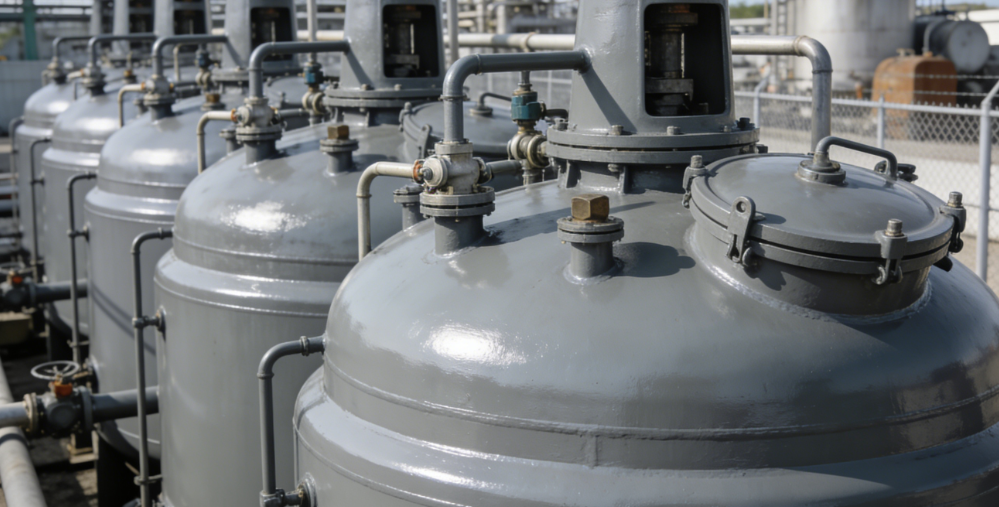
Hydrogenated Bisphenol F Epoxy Powder Coating is a sophisticated, thermoset finish based on a specialized epoxy resin. The “Hydrogenated Bisphenol F” (HBF) name refers to a chemical modification of the standard Bisphenol F molecule, where hydrogen is added to its structure. This hydrogenation process significantly alters the resin's characteristics, reducing its viscosity and, most importantly, enhancing its final properties after curing. When this advanced resin is formulated into a powder coating, applied electrostatically, and cured with heat, it forms a dense, tightly cross-linked, and exceptionally resilient film.
The result is a coating that builds upon the inherent strengths of traditional epoxy powders—noted for their “superior corrosion resistance, strong adhesion, [and] chemical durability”—and elevates them to a new level. While standard epoxies are the go-to for “indoor machinery, electrical cabinets, pipes, [and] valves,” a Hydrogenated Bisphenol F Epoxy Powder Coating is engineered for even more severe service. It offers improved resistance to solvent permeation, greater flexibility, and a higher resistance to chemical attack, making it a specialized solution for protecting critical assets where standard epoxies may reach their limit. Its development is a direct response to the need for coatings that can withstand prolonged immersion, chemical spills, and other severe industrial exposures.
Selecting a Hydrogenated Bisphenol F Epoxy Powder Coating is an investment in maximizing the lifespan and reliability of components in punishing environments. Its performance benefits address the most common failure points of protective finishes.
This is the standout feature of this coating technology. The hydrogenated resin creates a film with extremely low permeability. This dense, non-porous barrier provides outstanding resistance to a vast spectrum of aggressive media, including strong acids, alkalis, organic solvents, oils, and fuels. This makes it vastly superior for applications involving continuous chemical exposure or immersion, protecting the substrate from degradation and maintaining the purity of contained products.
A common challenge with highly cross-linked, hard coatings is brittleness, which can lead to cracking under thermal or mechanical stress. The molecular structure of a Hydrogenated Bisphenol F Epoxy Powder Coating imparts excellent flexibility and elongation properties. This allows the coating to expand and contract with the metal substrate through temperature cycles and to withstand minor impacts or flexing without cracking or losing adhesion, a critical property for pipes, tanks, and structures subject to movement or vibration.
Building on the “strong adhesion” characteristic of epoxies, the hydrogenated version often achieves an even more tenacious bond to properly prepared steel and other metals. Furthermore, its excellent barrier properties and flexibility work together to provide outstanding resistance to underfilm corrosion, even at scratches or cut edges. This means the coating is highly effective at preventing the spread of rust, a key factor in long-term asset protection in corrosive atmospheres like marine or industrial settings.
The coating maintains strong electrical insulation properties, making it suitable for components requiring both corrosion protection and electrical isolation. It also offers good thermal stability, maintaining its properties across a wide temperature range, which is essential for process equipment that may see thermal cycling.
The unique properties of Hydrogenated Bisphenol F Epoxy Powder Coating make it the specification of choice for industries where failure carries significant cost, safety, or environmental risks.
This is a premier application area where product purity and equipment longevity are paramount.
Chemical Storage and Reactor Vessels: Used as a high-integrity liner for tanks containing aggressive solvents, concentrated acids, or reactive intermediates.
Process Piping and Fittings: Protects the interior and exterior of pipework in plants where standard coatings may degrade, preventing contamination and leaks.
Pharmaceutical Manufacturing Equipment: Provides a cleanable, inert, and non-contaminating surface for vessels and ducts in compliance with stringent hygiene standards.
For assets constantly battling moisture and salt.
Ballast Tanks and Internal Ship Structures: Offers superior protection in confined, humid spaces where condensation and seawater are constant threats, outperforming many standard tank coatings.
Desalination Plant Components: Protects pipes, valves, and vessels from highly saline water and brine, which are exceptionally corrosive.
Water and Wastewater Treatment Equipment: Ideal for components exposed to sewage, chemicals, and biofilms, where coating integrity is critical.
Where reliability under extreme pressure and exposure is key.
Subsea Equipment and Pipelines: Provides a robust barrier against seawater, cathodic disbondment, and hydrocarbons for components that are difficult and costly to maintain.
Fuel Storage and Handling Systems: Resists the degrading effects of diesel, gasoline, and biofuels on storage tanks and transfer lines.
Power Plant Scrubbers and Ductwork: Withstands corrosive flue gas desulfurization (FGD) environments and chemical cleaning processes.
For extending the life of infrastructure.
Industrial Flooring in Chemical Plants: Creates a seamless, chemical-resistant, and load-bearing surface for areas prone to spills and heavy traffic.
Bridges and Steel Structures in Corrosive Environments: Offers long-term protection for structural steel in coastal or industrial areas, especially in complex, hard-to-protect areas.
To unlock the full potential of a Hydrogenated Bisphenol F Epoxy Powder Coating, precise planning and execution are required.
Recognize the Need for a Premium Solution: This is not a general-purpose coating. It should be specified when standard epoxy or even polyurethane coatings (noted for their “high scratch resistance [and] chemical durability”) are insufficient for the specific chemical exposure or required service life.
Insist on Impeccable Surface Preparation: The performance of any high-end coating is directly tied to surface preparation. For a Hydrogenated Bisphenol F Epoxy Powder Coating, near-white metal abrasive blasting (Sa 2½) is typically the minimum standard to ensure perfect adhesion and eliminate hidden corrosion starters.
Control Application and Curing Precisely: Partner with applicators certified for high-specification industrial coatings. Strict adherence to the manufacturer’s recommended film thickness and curing profile is essential to achieve the designed cross-link density and chemical resistance.
Leverage Technical Expertise: Given its specialized nature, work closely with the coating manufacturer from the design stage. Provide full details of the service environment (chemicals, concentrations, temperatures, immersion/abrasion factors) to confirm that the specific formulation of Hydrogenated Bisphenol F Epoxy Powder Coating is the optimal choice for your project.
In the landscape of protective coatings, Hydrogenated Bisphenol F Epoxy Powder Coating stands as a pinnacle of chemical resistance and durable performance. It is the engineered solution for projects where the operating environment is relentlessly aggressive and the cost of failure is unacceptably high. By choosing this advanced technology, you are specifying more than a finish; you are integrating a resilient, long-lasting defense system that safeguards critical infrastructure, ensures operational continuity, and provides a demonstrable return on investment through dramatically reduced maintenance and extended service life.
For engineers, asset managers, and specifiers in the chemical, marine, energy, and heavy industrial sectors, selecting a Hydrogenated Bisphenol F Epoxy Powder Coating is a decisive, forward-thinking strategy. It represents a commitment to quality, safety, and longevity, ensuring that valuable assets are protected by the most capable barrier science can provide. When standard solutions are not enough, this coating delivers the confidence and performance needed to face the toughest challenges head-on.



Company Phone
+86-21-6420 0566
Working hours
Monday to Friday
Mobile phone:
13816217984
Email:
info@qinsun-lab.com