Time: Popularity:0times
IT industry powder coating is a high-performance functional powder coating specially applied to electronic equipment and related infrastructure. Its core function is to provide appearance and decoration while also imparting key electrical and protective properties such as insulation, antistatic performance, flame retardancy, and weather resistance to meet the stringent technical requirements of communication equipment, data centers, consumer electronics, and other products.
This article systematically introduces the concept, characteristics, functions, applications, considerations for selecting IT industry powder coatings, and solutions to common problems. It focuses on the specific applications of IT industry powder coatings to help readers better understand what IT industry powder coating is and what characteristics and functions it provides.
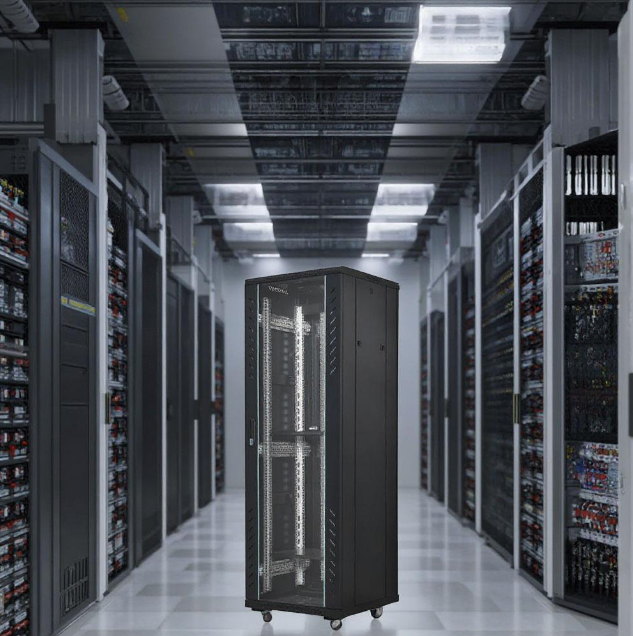
What Is IT Industry Powder Coating
IT industry powder coating is a general term for a class of high-performance functional powder coatings specially developed for information technology (IT) equipment and related infrastructure. Unlike ordinary decorative powder coatings, its core characteristic is that, while meeting appearance requirements, it must also provide a series of specific electrical properties, protective properties, and processing adaptability to suit the operating environment and manufacturing processes of electronic products.
Characteristics of IT Industry Powder Coating
The main characteristics of IT industry powder coating are as follows.
1. Insulation
High volume resistivity: The volume resistivity is typically 10¹³–10¹⁵ Ω·cm, effectively preventing leakage and short circuits.
High dielectric strength: The breakdown voltage is high and can generally reach 20–40 kV/mm, ensuring the safety of high-voltage components.
2. Antistatic (ESD) Type
Controllable surface resistance: By adding conductive fillers such as carbon black and carbon nanotubes, the surface resistance can be controlled at 10⁶–10⁹ Ω (antistatic grade) or 10³–10⁵ Ω (conductive grade).
Resistance to electrostatic breakdown: Prevents electrostatic accumulation from causing damage to sensitive electronic components.
3. Electromagnetic Shielding (Special Type)
EMI/RFI shielding function: Certain special formulations, such as those containing nickel or silver powder, provide electromagnetic shielding effects.
4. High Flame Retardant Rating
UL94 certification: Can reach the V-0 level (self-extinguishing within 10 seconds during vertical burning), and some products can reach 5VA, the highest rating.
Halogen-free flame retardancy: Complies with industry trends by using phosphorus-based or metal hydroxide flame retardants instead of halogen-containing flame retardants.
III. Weather Resistance and Durability Characteristics
5. High Weather Resistance (Outdoor Equipment)
UV resistance: Through QUV accelerated weathering testing (≥1000 h, gloss retention ≥80%), it is suitable for long-term outdoor exposure.
Resistance to temperature changes: Can withstand alternating high- and low-temperature cycles from -40°C to +80°C without cracking or peeling.
Salt spray resistance: Passes neutral salt spray testing for ≥500 h (rusting at the cross-cut area ≤2 mm), making it suitable for coastal or industrially polluted environments.
6. High Scratch Resistance and High Hardness
Pencil hardness: Typically ≥2H, with some high-wear-resistance types reaching 4H–5H.
Scratch resistance: The surface is dense and smooth, resisting daily friction and scratches from hard objects.
Functions of IT Industry Powder Coating
The main functions of IT industry powder coating are reflected in the following aspects:
1. Electrical Protection
(1) Insulation protection: The high-resistivity coating (10¹³–10¹⁵ Ω·cm) can effectively prevent leakage, short circuits, and arc breakdown, ensuring the electrical safety of equipment.
(2) Antistatic (ESD): By controlling the surface resistance (10⁶–10⁹ Ω), it prevents electrostatic accumulation from causing irreversible damage to sensitive electronic components.
(3) Electromagnetic shielding: Special formulations containing conductive fillers can shield external electromagnetic interference and ensure signal integrity in high-frequency communication equipment.
2. Flame Retardancy and Fire Protection
(1) Delaying flame propagation: The coating reaches UL94 V-0 or 5VA levels and self-extinguishes when exposed to fire, providing valuable time for personnel evacuation and fire rescue.
(2) Isolation protection: The dense flame-retardant char layer blocks heat transfer and protects internal precision circuits and components from high-temperature damage.
3. Weather Resistance Protection
(1) Resistance to UV aging: The coating's weather resistance can withstand long-term sunlight exposure, effectively preventing chalking and fading.
(2) Resistance to temperature changes: The coating has excellent resistance to temperature changes and can effectively withstand alternating high- and low-temperature conditions from -40°C to 80°C without cracking or peeling.
(3) Corrosion resistance: It passes neutral salt spray testing for ≥500 h, resisting salt spray and acid rain corrosion in coastal and industrially polluted environments.
4. Surface Protection
(1) Scratch resistance: The high-hardness coating (≥2H) resists daily friction and scratches from hard objects, maintaining a like-new appearance for a long time.
(2) Stain and fingerprint resistance: The smooth and dense surface is less prone to fingerprints and stains and is easy to clean.
Application Fields of IT Industry Powder Coating
Where is IT industry powder coating used? Its specific application scope is as follows:
1. Communication Network Equipment
(1) 5G base stations: Base station housings, radomes, and filter cavities — require high weather resistance (long-term outdoor exposure) + flame retardancy (UL94 V-0) + salt spray resistance (coastal areas).
(2) Routers and switches: Chassis housings and heat sinks — require insulation (short-circuit prevention) + EMI shielding (signal integrity).
(3) Optical fiber distribution frames: ODF frames and fiber-optic cross-connect cabinets — require antistatic performance (protection of optical modules) + scratch resistance (frequent plugging and unplugging operations).
(4) Satellite communication equipment: Outdoor unit housings — require extreme cold weather resistance (-40°C) + UV resistance.
2. Consumer Electronics and Terminal Equipment
(1) Laptops: A/C/D-side housings and keyboard frames — require high hardness (≥3H, scratch resistance) + high leveling (mirror-like appearance) + fingerprint resistance + halogen-free properties.
(2) Tablet computers: Back covers and brackets — require a fine surface feel (sand texture/rubber-like texture) + sweat resistance (human contact).
(3) Monitors: Bezels and base stands — require high gloss (decorative appearance) + antistatic performance (prevention of dust adsorption).
(4) Projectors: Body housings — require high heat resistance (heat-generating areas of the equipment) + flame retardancy.
(5) Smart wearables: Smartwatch charging stands and earbud charging cases — require antibacterial properties (optional function) + a fine tactile feel.
3. Data Center Infrastructure
(1) Server cabinets: Cabinet frames, panels, and trays — require flame retardancy V-0 (critical for fire protection in high-density equipment) + antistatic performance (protection of hard drives and other sensitive components).
(2) PDU power distribution units: Power distribution module housings — require high insulation (resistance to dielectric breakdown) + flame retardancy.
(3) Hot/cold aisle containment systems: Sheet metal components of enclosed aisles — require corrosion resistance (precision data center environments) + antistatic performance (reduced dust adsorption).
(4) Cable racks and cable trays: Cable management components — require insulation (prevention of leakage caused by cable damage).
4. Network Terminals and Commercial Equipment
(1) POS machines: Cash register housings and barcode scanner housings — require antibacterial properties (optional, for food service and retail environments) + scratch resistance (frequent use) + easy cleaning.
(2) ATMs: Cabinet housings and control panels — require high hardness (resistance to vandalism) + weather resistance (outdoor wall-mounted models) + anti-graffiti properties.
(3) Self-service information terminals: Self-service machine housings in hospitals, banks, and airports — require weather resistance (strong indoor lighting) + antistatic performance (around touchscreens).
(4) Security surveillance equipment: Camera housings and NVR recorder chassis — require outdoor weather resistance + salt spray resistance + compatible dustproof and waterproof coating systems.
How to Choose IT Industry Powder Coating
When selecting IT industry powder coating, we may face the problem of not knowing how to choose. Based on our industry experience, we recommend focusing on the following aspects when selecting IT industry powder coating.
1. Consider the Operating Environment
Equipment Type | Operating Environment | Preferred Performance | Secondary Performance |
Outdoor base stations/cameras | Outdoor exposure, sunlight, rain, and salt spray | Weather resistance (QUV ≥1000 h) + salt spray resistance | Flame retardancy V-0 + antistatic |
Data center cabinets | High-density, enclosed indoor environment | Flame retardancy V-0 (required) | Antistatic + corrosion resistance |
Consumer electronics housings | Frequent human contact and portable use | High hardness (≥3H) + high leveling | Halogen-free + fingerprint resistance |
Power supplies/UPS/power distribution | High voltage, heat generation, short-circuit risk | Insulation (volume resistivity ≥10¹³ Ω·cm) | Flame retardancy V-0 |
Chip/cleanroom equipment | Electrostatic-sensitive environment | Antistatic (surface resistance 10⁶–10⁹ Ω) | Dust-free/low volatility |
2. Check Certification Requirements
When requesting product data from suppliers, focus on these five core indicators:
Indicator | Required Standard | Testing/Certification | Consequences of Nonconformity |
Flame retardancy | UL94 V-0 (required) | UL certification report | Unable to enter data center/base station projects |
Insulation resistivity | ≥10¹³ Ω·cm | GB/T 1410 | Electrical safety risks in power equipment |
Antistatic performance | 10⁶–10⁹ Ω (ESD grade) | ANSI/ESD S20.20 | Breakdown of sensitive components |
Environmental compliance | RoHS + REACH + halogen-free | SGS test report | Unable to export or enter major customer supply chains |
Weather resistance | QUV ≥1000 h, gloss retention ≥80% | GB/T 1865 | Chalking and fading after 1–2 years outdoors |
3. Check the Supplier and Formulation to Identify Risks
When selecting a supplier, clarify these three questions:
What is the flame-retardant system?
✅ Preferred: Phosphorus-based flame retardants or metal hydroxides (halogen-free and environmentally compliant).
❌ Watch out for: Halogen-containing flame retardants (prohibited by some customers and may release toxic smoke during combustion).
Is the antistatic performance long-lasting?
Conductive fillers such as carbon black/carbon nanotubes provide permanent antistatic performance, rather than temporary surface-active agents (which lose effectiveness quickly).
Common Problems and Solutions for IT Industry Powder Coating
The most common problems encountered during the use of IT industry powder coating are mainly reflected in the following aspects. Based on our industry experience, we propose corresponding solutions to help effectively resolve powder coating problems you may encounter.
1. Flame Retardant Performance Does Not Meet Requirements
Problem Description
During vertical burning testing, the sample burning time exceeds 10 seconds (failing to reach the V-0 level), or dripping material ignites the cotton.
Cause Analysis
The amount of flame retardant added is insufficient or unevenly dispersed.
(1) Coating thickness is too thin: Flame-retardant performance is positively correlated with film thickness. When the film thickness is <60 μm, V-0 performance may fail.
(2) Curing temperature is too high or curing time is too long: This causes some flame retardants to decompose and lose effectiveness.
(3) Improper filler selection: The use of low-cost fillers such as calcium carbonate may dilute the flame-retardant effect.
Solutions
(1) Formulation: Require the supplier to adjust the proportion of flame retardant and ensure uniform dispersion through high-speed premixing.
(2) Process: Strictly control the film thickness within the range of 60–80 μm (too thin may cause flame-retardant failure, while excessive thickness wastes costs and affects assembly).
(3) Curing: Strictly follow the curing window (temperature + time) recommended in the TDS and avoid over-baking.
(4) Inspection: Conduct rapid UL94 verification for each batch (use the lighter method for preliminary screening and immediately stop the equipment for investigation if abnormalities are found).
2. Insulation Performance Failure, Dielectric Breakdown or Leakage
Problem Description
Breakdown occurs during dielectric withstand testing, or the measured volume resistivity is below 10¹³ Ω·cm.
Cause Analysis
(1) Bubbles or impurities inside the coating: These form localized partial-discharge paths.
(2) Uneven coating thickness: The film thickness is too thin at sharp corners or edges, creating weak points for dielectric breakdown.
(3) Incomplete curing: Insufficient crosslinking density increases the migration rate of free ions and reduces resistance.
(4) Burrs or sharp edges on the substrate: Discharge at sharp points during spraying can cause pinholes, and sharp points are prone to discharge breakdown under high voltage.
Solutions
(1) Pretreatment: Grind and remove sharp corners and burrs from the substrate, especially on stamped component edges.
(2) Spraying: Reduce the electrostatic voltage or adjust the spray gun angle at sharp corners to prevent excessive powder accumulation and pinholes.
(3) Curing: Verify the actual temperature profile of the curing oven to ensure complete curing (use the MEK wipe test for verification).
(4) Inspection: Use an electric spark pinhole detector to screen insulated components individually and immediately isolate any components with pinholes.
3. Unstable or Degraded Antistatic Performance
Problem Description
The surface resistance after spraying exceeds the range of 10⁶–10⁹ Ω, or the antistatic performance disappears after a period of use.
Cause Analysis
(1) Temporary antistatic agents are used: Migratory surface-active agents volatilize or are consumed through wiping over time, causing rapid degradation of antistatic performance.
(2) Uneven dispersion of carbon black/carbon nanotube conductive fillers: This results in significant resistance fluctuations between batches.
(3) Coating is too thick: Conductive fillers require a certain volume concentration to form a conductive network in the coating. Excessive film thickness may instead dilute the surface conductive pathways and increase resistance.
(4) Surface contamination: Graffiti, fingerprints, or grease covering the surface can block conductive pathways.
Solutions
(1) Formulation: Select permanent conductive fillers such as conductive carbon black and carbon nanotubes instead of additive-type surface-active agents.
(2) Process: Strictly control the film thickness within the specified range (excessive thickness increases resistance), and ensure that the powder fully melts and levels so that the conductive network is uniformly distributed.
(3) Cleaning: Wipe the contaminated surface with alcohol to restore the conductive pathway.
(4) Inspection: Use a surface resistance tester for 100% batch inspection to ensure that the resistance value remains within the target range.
4. Poor Coating Adhesion to the Substrate (Peeling)
Problem Description
The cross-cut test rating is ≥3 (severe peeling), or the coating cracks at bent areas.
Cause Analysis
(1) Insufficient pretreatment: Oil, rust, or an oxide layer remains on the substrate surface.
(2) Excessive flame retardant/functional filler loading: The resin proportion is reduced, resulting in decreased bonding strength between the coating and substrate.
(3) Insufficient or excessive curing: Over-baking makes the coating brittle, while under-baking results in insufficient crosslinking.
(4) Mismatch between substrate material and coating system: For example, galvanized steel sheets and aluminum alloys may require the corresponding primer or pretreatment system.
Solutions
(1) Strengthen pretreatment: Ensure that degreasing and phosphating/silanization meet requirements (water-break test passes).
(2) Formulation communication: For highly filled functional powders, require the supplier to add an adhesion promoter such as a silane coupling agent.
(3) Process verification: Determine the optimal curing window through MEK wiping and impact testing.
(4) Material matching: For substrates that are difficult to bond, such as aluminum alloys, chromating/passivation pretreatment or a specialized primer should be used.
If you encounter difficult-to-resolve problems during the use of IT industry powder coating, please feel free to contact us for professional technical support. We look forward to discussing solutions together and promoting the development of the powder coating industry.
We hope this article can provide you with a professional and reliable reference regarding the powder coating industry. We sincerely welcome you to consult us regarding powder coating product performance, industry standards, application methods, precautions, or any other related questions. We look forward to hearing from you at any time through messages or direct contact, so that we can provide you with more detailed product information, demonstration videos, or customized solutions to help you gain a comprehensive understanding of the product's functions and advantages.



Company Phone
+86-21-6420 0566
Working hours
Monday to Friday
Mobile phone:
13816217984
Email:
info@qinsun-lab.com