Time: Popularity:0times
Have you ever encountered this situation: customers complaining, "Why do other people's products look brand new after three years, while mine peels off after only one year, even though we paid a lot?" "I spent a lot of money, but the performance never meets my expectations?"—The root of the problem often lies in the initial choice. The following three simple and easy-to-understand points have been compiled for you!
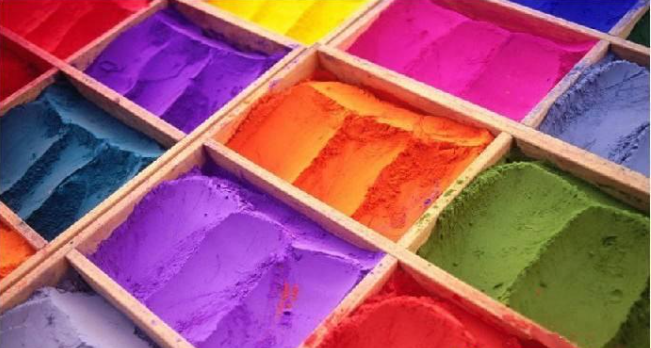
The first step in selecting powder coatings is to clarify whether the application scenario is outdoor or indoor—the environmental corrosion intensity varies drastically in different scenarios, and the core performance requirements of the corresponding coating systems are also completely different. Choosing the right system is half the battle won.
Outdoor products, such as railings, doors and windows, car wheels, and outdoor recreational facilities, are exposed to sunlight, wind, rain, and acid rain corrosion for extended periods. The core requirement is "resilience": they must possess superior weather resistance, UV resistance, corrosion resistance, and anti-chalking properties. For these scenarios, Pure Polyester Powder Coatings are the preferred choice.
The stable molecular structure of pure polyester acts like a "diamond shield" for the workpiece, providing long-term resistance to UV damage from sunlight and effectively preventing fading and chalking. It also boasts strong resistance to rain and acid rain, excellent gloss and color retention, allowing products to maintain a new appearance for a long time, making it particularly suitable for outdoor products with high requirements for lifespan and appearance stability.
Indoor products, such as server racks, metal furniture, and interior metal decorative parts, do not need to withstand the extreme outdoor environment. Their core requirements focus on decorative properties, leveling properties, mechanical strength, and chemical resistance. For these scenarios, the cost-effective choice is Epoxy polyester hybrid powder coating.
This hybrid system perfectly combines the high hardness of epoxy resin with the basic weather resistance of polyester resin (although it cannot withstand outdoor UV radiation, it is perfectly adequate for indoor use). It not only has good leveling properties, producing a smooth and even coating surface after curing, but also offers a rich selection of colors to meet diverse decorative needs. Simultaneously, its excellent mechanical strength allows it to withstand daily indoor collisions and friction, and it is also resistant to common chemical contamination, making it an ideal choice for indoor metal coatings.
After determining the application scenario and basic system, the next step is to focus on the core functional requirements of the product. Different industries and products with different uses have different emphases on coating performance; precise matching is essential to avoid "performance overkill" or "performance underkill."
Corrosion resistance is a core requirement for many industrial products, and the judgment standard is clear: look at the number of hours of salt spray testing. If the product is used in a normal indoor dry environment, the coating must meet the requirement of ≥300 hours of neutral salt spray testing without abnormalities (no rust spots, no peeling); if used in high-humidity environments, coastal areas, or chemical industrial parks and other high-corrosion-risk scenarios, ≥1000 hours of neutral salt spray testing is a basic requirement. Only in this way can the coating ensure long-term protection of the workpiece under extreme corrosive environments and avoid premature damage.
If the product is used in medical equipment, food processing equipment, children's furniture, etc., "antibacterial" and "easy-to-clean" are core requirements, necessitating the selection of powder coatings with added special antibacterial agents. It is recommended to prioritize antibacterial powders with medical-grade certification. These coatings effectively inhibit the growth of common bacteria such as Escherichia coli and Staphylococcus aureus on the coating surface, while providing a smooth, easy-to-clean surface that meets hygiene standards in the medical and food industries, preventing cross-contamination.
If the substrate being coated is heat-sensitive, such as wood or plastic composites, conventional high-temperature curing (usually above 180℃) can lead to substrate deformation and damage. In this case, low-temperature curing technology becomes crucial. Low-temperature curing powder coatings typically have a curing temperature between 130-160℃, ensuring full curing and performance compliance while avoiding damage to the substrate. It also significantly reduces energy consumption during the baking process, balancing performance with environmental friendliness and energy conservation.
After selecting the right system and matching the functions, the final step is to assess the physical quality of the powder coating. The difference between high-quality and low-quality powder is directly reflected in the performance and overall cost. A quick way to distinguish them is through a "touch, look, and test" method.
Take a small amount of powder coating and rub it between your fingers. High-quality powder feels smooth, silky, and very fluffy, like fine, pure flour. If it feels rough, has a noticeable grainy texture, or feels heavy and lumpy, it's likely a low-quality product—either impurities were introduced during production or the filler quality is poor. Such powders are prone to defects like particles and pinholes after curing.
It's best to conduct small-batch test spraying in a laboratory or workshop to observe the powder's spraying performance. High-quality powder has excellent electrostatic adsorption, high powder application rate, and can quickly and evenly adhere to the workpiece surface during spraying. It also allows for a larger spraying area per unit weight (e.g., one kilogram of powder can cover more square meters), effectively reducing actual usage costs. Inferior powder, on the other hand, is prone to powder shedding and poor adhesion, and has poor coverage, requiring repeated spraying to achieve the desired thickness. While the purchase price may seem low, the actual overall cost can actually increase significantly.
The core performance of the coating can be determined through simple tests: First, the cross-cut adhesion test. After the coating has cured, it is divided into standard grids. High-quality powder coatings have smooth and neat grid edges with no grid peeling, achieving first-class adhesion. Second, observe the surface leveling. High-quality powder, after curing, has a smooth and even surface without defects such as particles, pinholes, or orange peel, directly reflecting the quality of the resin and additives. Conversely, a rough surface with many defects indicates poor powder quality, which is prone to peeling and damage during subsequent use.
The core logic for choosing the right powder coating is actually quite simple: first, determine the system based on "outdoor/indoor" requirements; second, match performance according to core needs; and finally, use "touch, look, and test" to verify the quality of the actual product. Don't pursue "the higher the parameters, the better," but rather "precise matching"—choose pure polyester for outdoor applications to ensure weather resistance, and epoxy-polyester for indoor applications to maximize cost-effectiveness; determine core functions such as corrosion resistance, antibacterial properties, and low-temperature curing based on the application scenario; and then judge the quality of the actual product through simple sensory and testing methods.
By following these three steps, you can avoid selection pitfalls and choose a powder coating that is "reasonably priced and meets performance standards." This ensures stable product quality, reduces customer complaints, and avoids rework and waste caused by choosing the wrong product, truly maximizing cost-effectiveness.



Company Phone
+86-21-6420 0566
Working hours
Monday to Friday
Mobile phone:
13816217984
Email:
info@qinsun-lab.com