Time: Popularity:0times
During the application of powder coatings, especially in the humid and hot south, users often find that the powder clumps when they open the box before spraying.
This necessitates sieving the powder by spraying workers, affecting spraying efficiency. Some special powders, after being stored for a certain period under less than ideal environmental conditions, exhibit abnormal gloss, rough surface, decreased mechanical properties, and poor boiling water resistance after spraying and curing.
These are often judged as substandard powders, or what we commonly call powder deterioration. The main reasons for these phenomena are the special characteristics of the powder itself and poor storage stability caused by improper storage. Mechanistically, this involves both physical and chemical changes.
This article mainly analyzes the mechanisms of physical and chemical changes to explain the abnormal storage stability of powder coatings for aluminum profiles and provides some ideas on how to improve the storage stability of powder coatings.
Meanwhile, some application precautions were provided to powder coating users, ultimately extending the shelf life of powder coatings and reducing unnecessary troubles during the spraying process. Analysis of Causes
Powder coatings undergo slow changes during storage, primarily because the resin, curing agent, and various additives are mixed together after extrusion and melting during the powder coating production process.
Therefore, after being stored for a period of time under certain conditions, the mixed raw materials themselves or with each other will undergo some minor changes, rendering the powder coating unusable.
Typically, after exceeding the storage time, the powder will exhibit phenomena such as agglomeration, decreased fluidity, and abnormal gloss, poor leveling, and a rougher surface in the coating film. We generally believe that the poor storage stability of powder has two main causes.
Firstly, the physical state of the powder changes. This is because the powder coating is exposed to high temperatures (close to or above the glass transition temperature) for an extended period, causing the powder to transform from a glassy state to a highly elastic state, resulting in softening and stickiness. This manifests as powder agglomeration or clumping, making it difficult to fluidize and disperse in the fluidization tank, affecting normal spraying application.
Another factor involves changes in the chemical activity of the powder. The addition of reactive matting agents and matting curing agents to certain powder coatings can increase the powder's activity.
Under specific time and temperature conditions, the powder undergoes partial chemical reactions, leading to powder deterioration. This typically manifests as changes in the leveling and gloss of the coating film, and sometimes a partial decrease in the film's physicochemical properties.
Specific influencing factors are analyzed below:
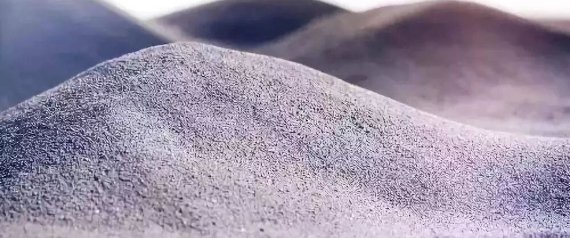
After a period of storage, changes in the physical state of powder coatings, such as clumping or aggregation, are mainly caused by powder softening and stickiness. This stickiness is primarily due to the storage environment temperature being close to or higher than the powder's glass transition temperature.
The glass transition temperature (Tg) is the temperature at which a polymer transitions from a highly elastic state to a glassy state. It refers to the transition temperature of amorphous polymers (including the non-crystalline portion of crystalline polymers) from a glassy state to a highly elastic state, or vice versa. It is the lowest temperature at which the macromolecular chains of amorphous polymers can move freely, and is usually expressed as Tg, which varies depending on the measurement method and conditions.
When designing powder coating formulations for aluminum profiles, resins with high glass transition temperature (Tg) should be selected to ensure the coating's appearance. Additionally, appropriately increasing the content of pigments and fillers in the formulation, without affecting the powder coating and its various properties, can also increase the glass transition temperature of the powder coating.
In powder coatings, the direct contact between the resin and curing agent leads to chemical reactions under certain conditions over a long period, causing deterioration. This typically manifests as changes in the leveling and gloss of the coating film, and sometimes a partial decrease in its physicochemical properties (such as boiling water resistance and mechanical properties).
Higher reactivity of the powder coating system itself or higher storage temperatures will accelerate these chemical changes.
The reactivity of powder coatings is mainly determined by the acid value/hydroxyl value of the polyester resin, the amount of accelerator, and the amount of reactive matting agents or matting curing agents.
Generally, a higher acid value/hydroxyl value of the polyester resin indicates more reactive functional groups and greater reactivity, which macroscopically translates to a shorter gelation time in the powder system.
For example, polyurethane powders made with high-hydroxyl-value resins have a significantly shorter gelation time than those made with low-hydroxyl-value resins. These powders require more stringent storage conditions, are highly susceptible to deterioration, and have extremely short shelf lives in practical applications.
While the acid values of polyester resins may not differ significantly, the reactivity of different types or manufacturers varies. For instance, resins used in wood grain powders are generally more reactive than those used in ordinary powders. Therefore, wood grain powders, after a period of time, may not physically clump together, but they can cause paper tearing difficulties during transfer printing.
This is because the high reactivity of wood grain powder causes a small portion of the powder to slowly react and deteriorate. Therefore, when designing a formulation, it is crucial to select resins with appropriate acid values and reactivity based on customer requirements.
For semi-matte and matte formulations, matting agents or matting curing agents are added. Most physical matting agents on the market today are internal reaction equilibrium matting agents, meaning they do not require the consumption of curing agents.
Matting curing agents directly consume curing agents in the reaction, thus both types of additives increase the chemical activity of powder coatings and shorten the gelation time, making the powder coatings more susceptible to chemical changes during storage.
Therefore, the storage stability of powder coatings can be improved by selecting matting agents that do not affect the reactivity of the powder coating or by adjusting the formulation to minimize the amount of reactive matting agents or matting curing agents.
Some special formulations use accelerators, which manifest as a significantly shorter gelation time in the powder coating. This indicates that accelerators significantly increase the activity of the powder coating system, making the powder coating more prone to deterioration. Therefore, their use should be avoided as much as possible.
The particle size of powder coatings is usually controlled between 30-40 μm (D50). If there are many fine powders below 10 μm, their specific surface area increases rapidly, and the contact area between powder particles also increases, making them prone to agglomeration.
Especially in hot and humid summer conditions, powder is more prone to clumping, making it difficult to fluidize in the fluidizing tank and failing to form a uniform mist, resulting in uneven powder output from the spray gun and reduced spraying efficiency.
Therefore, controlling the particle size distribution of the powder, especially reducing the content of fine powder, can also improve the storage stability of powder coatings.
From the perspective of the powder coating itself, based on the above analysis, we can improve the storage stability of powder coatings for aluminum profiles in the following ways:
4.1 Without affecting the various properties of the powder coating and the coating film, try to select resins with high Tg and appropriately increase the content of pigments and fillers in the formulation.
4.2 According to the performance of different products and customer requirements, select resins with appropriate acid values and activity, strictly control the type and amount of matting agents, and avoid using accelerators.
4.3 Use other additives sparingly and cautiously, and communicate with raw material manufacturers to improve the storage stability of raw materials.
4.4 During powder production, control the particle size distribution, especially reducing the content of fine powder. After powder grinding, allow the powder in the container to cool before sealing, or ventilate the workshop with cooling air to prevent the powder temperature from becoming too high.
4.5 During the manufacturing process of powder coatings, loosening agents such as fumed silica and alumina C, which have large specific surface areas and strong hygroscopic capacity, are added externally.
This forms an isolation layer between powder coating particles, reducing the chance of particle collision and aggregation, making the powder coating less prone to clumping, thereby improving the storage stability of the powder coating.
Because it is necessary to balance the various properties of the powder coating and the film, the Tg of the powder coating cannot be designed to be very high under current technology.
Therefore, the storage stability of the powder coating is fixed after production. To extend its shelf life, the user's storage environment is also very important. For architectural aluminum powder coatings, it is recommended that users meet the following conditions during storage and use the powder as quickly as possible.
Storage temperature: Not exceeding 30℃, preferably below 25℃.
Storage Environment: The storage environment should be well-ventilated and dry, avoiding direct sunlight on the powder. The storage location should not be near any source of ignition and should be kept away from heat sources.
Other Precautions: Prevent water accumulation or dripping in the warehouse. Powder coating packaging boxes should be placed on shelves or wooden boards insulated from the ground, and the stacking height should ideally not exceed four layers.
Improving the storage stability of powder coatings requires not only that raw material manufacturers design raw materials with high Tg, but also that powder manufacturers design targeted formulations and control production processes. It also requires improvements in the storage environment by powder coating users.



Company Phone
+86-21-6420 0566
Working hours
Monday to Friday
Mobile phone:
13816217984
Email:
info@qinsun-lab.com