Time: Popularity:0times
Architectural weather-resistant powder coating is a dry powder coating material specially designed for outdoor architectural metal components such as aluminum profiles, curtain walls, doors and windows, and guardrails. It forms a protective film through electrostatic spraying and high-temperature curing, enabling it to resist UV aging, retain gloss and color, and prevent corrosion during long-term exposure to sunlight and rain, thereby maintaining the appearance and protective function of buildings.
This article systematically introduces the concept, characteristics, functions, applications, selection considerations, and solutions to common problems of architectural weather-resistant powder coating. It focuses on the specific applications of architectural weather-resistant powder coating to help everyone better understand what architectural weather-resistant powder coating is and what its characteristics and functions are.
What Is Architectural Weather-Resistant Powder Coating
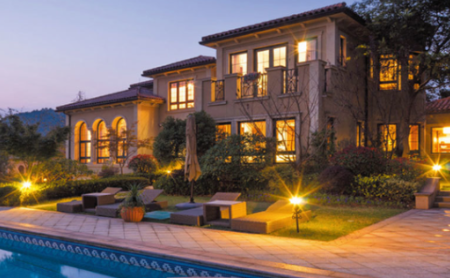
Architectural weather-resistant powder coating is a dry powder material based on thermosetting polyester, polyurethane, fluorocarbon resin, or other resins. It forms a coating on the surface of architectural metal components such as aluminum alloys through electrostatic spraying and high-temperature curing. Its core standard is GB/T 5237.4. which specifies clear classification requirements for weather resistance.
Characteristics of Architectural Weather-Resistant Powder Coating
The main characteristics of architectural weather-resistant powder coating are as follows.
Clear weather-resistance classification: The national standard GB/T 5237.4 classifies coating films into Classes I, II, and III, with increasing weather-resistance requirements. In international certifications, Class 1 powder requires a gloss retention rate of at least 50% after accelerated aging, while Class 2 powder requires at least 90%.
Excellent gloss and color retention: Fluorocarbon systems for curtain walls can pass 5.000 hours of QUV aging while maintaining a gloss retention rate of >80%; high-end super-durable polyester powder can pass 3.000 hours while maintaining a gloss retention rate of >82%; fluorocarbon powder can have a weather-resistant service life of 20–30 years.
Excellent adhesion: The cross-cut adhesion test must reach Class 0. with dry adhesion, wet adhesion, and boiling-water adhesion all required to reach Class 0.
Compliant hardness and resistance to indentation: Architectural profiles require a pencil hardness of ≥3H and coating resistance to indentation of ≥80.
Good impact and deformation resistance: Class I coating films must show no cracking or peeling after impact testing, while also providing resistance to bending and cupping to ensure that the coating does not fail during substrate processing.
Strong salt-spray resistance: Fluorocarbon powder can achieve 4.000 hours of neutral salt spray without abnormalities, making it suitable for high-salt coastal environments; super-durable polyester powder can pass 1.000 hours of salt spray testing, meeting conventional outdoor conditions in inland areas.
Compliant boiling-water resistance: After high-pressure water immersion, adhesion must reach Class 0. with no peeling or wrinkling.
Good chemical corrosion resistance: Resistance to damp heat, mortar, and acids and alkalis (such as no abnormality after immersion in 5% NaOH/3% HCl for 240 h) are standard requirements.
Functions of Architectural Weather-Resistant Powder Coating
The main functions of architectural weather-resistant powder coating are reflected in the following aspects:
1. Protecting Architectural Metal Substrates
A strong coating is formed on the surface of architectural metal components such as aluminum alloys, effectively isolating UV radiation, acid rain, salt spray, and moisture, preventing substrate corrosion and aging, and extending the service life of architectural components.
2. Maintaining the Long-Term Appearance of Buildings
It resists UV aging and, after long-term exposure to sunlight and rain, does not chalk, fade, or lose gloss, allowing architectural facilities such as curtain walls, doors and windows, and guardrails to maintain their original color and gloss for many years.
3. Withstanding Outdoor Mechanical Stress
The coating film combines hardness and flexibility and can withstand wind and sand abrasion, temperature-difference deformation, and minor impacts without cracking or peeling during bending and processing of the substrate.
4. Adapting to Various Corrosive Environments
Through resistance to salt spray, damp heat, acids and alkalis, and other properties, it can adapt to different climatic conditions such as high-salt coastal environments, industrial atmospheres, and acid rain, ensuring reliable protection throughout the building's entire service life.
5. Providing Decorative and Identification Functions
Its wide range of colors and good color retention can meet architectural appearance design requirements. Different colors can also be used to distinguish components or functional areas, facilitating identification and maintenance.
Application Areas of Architectural Weather-Resistant Powder Coating
Where is architectural weather-resistant powder coating used? Its specific application areas are as follows:
1. Architectural Doors, Windows and Curtain Walls (Most Common)
This is the most widely used application area. The aluminum profile doors and windows and metal frames of glass curtain walls are the core coating objects for weather-resistant powder coating. Application scenarios include commercial buildings, residential buildings, schools, libraries, sports venues, commercial centers, office buildings, and airports.
2. Building Facades and Cladding
Decorative metal cladding and facade components for building exteriors are also important application areas. These include window frames, facades, cladding, and doors made of aluminum profiles and steel building components. Fluorocarbon powder coating is specifically intended for applications such as architectural curtain walls and aluminum profiles.
3. Urban and Public Facilities
In addition to the main building structures, outdoor public facilities also make extensive use of these coatings. Examples include outdoor dining and leisure furniture, gazebos and terraces, lighting fixtures, gates, and fences.
4. Other Building-Related Components
These also include metal components used in specific architectural scenarios, such as steel doors and windows (polyester powder coating was applied to steel doors and windows even before its application to aluminum profiles), as well as aluminum profile surface treatment in areas such as rail transit vehicles and photovoltaic mounting structures.
How to Choose Architectural Weather-Resistant Powder Coating
When selecting architectural weather-resistant powder coating, we may face the problem of not knowing how to choose. Based on our industry experience, we recommend that the following aspects should be given particular attention when selecting architectural weather-resistant powder coating.
1. Select the Resin System According to the Weather-Resistance Grade
Architectural powder coatings are divided into different grades according to weather resistance, corresponding to different resin types and designed service lives. According to standard YS/T 680. outdoor powder coatings are divided into Class I, Class II, and Class III, with increasing weather resistance. For actual products, the main system choices are as follows:
(1) Fluorocarbon systems (FEVE/PVDF) have the highest weather resistance. They can pass 5.000 hours of QUV aging while maintaining a gloss retention rate of >80%, with an outdoor service life of 15–30 years. They are suitable for landmark building curtain walls, aluminum panels for airports/high-speed railway stations, and highly corrosive environments in coastal areas or heavily polluted industrial zones.
(2) Super-durable polyester systems offer the best cost performance, with a gloss retention rate of >82% after 3.000 hours of QUV testing and an outdoor service life of approximately 8–12 years. They are suitable for conventional outdoor applications such as doors, windows, and curtain walls of ordinary commercial housing, municipal guardrails, and photovoltaic frames in inland areas, and represent the largest-volume category used in the architectural field.
(3) Standard weather-resistant polyester systems typically provide approximately 1.000–2.000 hours of QUV resistance, with an outdoor service life of only 3–5 years. They are suitable only for non-long-term exposure scenarios such as indoor applications or short-term temporary enclosures.
2. Pay Attention to Certifications and Quantitative Indicators
International certifications provide a benchmark for quickly screening quality. Looking directly at the grade is the most straightforward approach:
(1) AAMA 2603 (entry level): Corresponds to a 10-year warranty, with a gloss retention rate of >50% after one year of Florida exposure.
(2) AAMA 2604 (mid-to-high level): Corresponds to a 20-year warranty, with a gloss retention rate of >50% after three years of exposure.
(3) AAMA 2605 (highest level): Corresponds to a 30-year warranty, with the gloss retention rate still meeting requirements after 10 years of exposure, and is usually based on a fluorocarbon system.
3. Determine the Supporting Solution According to the Environment
Conventional inland environments: A super-durable polyester single-coating system can meet requirements.
Coastal or high-salt-spray environments: A composite system of “primer + weather-resistant topcoat” is recommended, with the coating thickness at edges and corners required to reach 80–120 μm.
If the substrate is steel rather than aluminum, additional consideration should be given to the combination of an anti-corrosion primer (such as a zinc primer) and a weather-resistant topcoat.
Common Problems and Solutions for Architectural Weather-Resistant Powder Coating
The most common problems encountered during the use of architectural weather-resistant powder coating are mainly reflected in the following aspects. Based on our industry experience, we propose corresponding solutions to help effectively solve the powder coating problems you may encounter.
1. Cross-Contamination Between Super-Durable Powder and Standard Powder
Problem description: After super-durable powder coating (containing fluorocarbon or special resins) is mixed with standard weather-resistant powder, the weather resistance of the coating decreases significantly, resulting in early chalking and gloss loss. Even trace amounts of contamination can cause quality problems.
Possible causes: The reactivity, viscosity, and surface tension of super-durable powder coatings differ from those of standard architectural powder coatings. Trace amounts of super-durable powder remaining in the spraying equipment, spray booth, and recovery system can contaminate subsequent standard powder, and vice versa.
Solutions: Thoroughly clean the entire system when changing powder types (including application equipment, spray booth, etc.); conduct compatibility tests before mass production, with recommended testing at ratios of 0.1:99.9 and 99.9:0.1; confirm the suitability of recovered powder before use; properly plan the production schedule to avoid frequent changes between powder types.
2. Yellowing and Water-Marking of Thermosetting Fluorocarbon Powder
Problem description: Pure thermosetting fluorocarbon powder coating develops yellowing during high-temperature baking, with water-mark-like mottling appearing on the surface. This is a defect specific to fluorocarbon systems and occurs less frequently with standard polyester powder.
Possible causes: The structural characteristics of thermosetting fluorocarbon powder resin result in high selectivity toward additives, pigments, and fillers. Improper selection can cause surface mottling and even performance failure. The resin and curing-agent mixture may develop slight yellowing at 240°C. The rate at which the panel temperature rises during baking has a significant influence on the formation of water marks.
Solutions: Optimize the degassing agent and catalyst systems in the formulation; control the heating rate during baking to avoid excessively rapid increases in panel temperature; strictly control the baking temperature so that it does not exceed the resin's yellowing-resistance threshold (fluorocarbon systems can remain colorless and transparent below 220°C); specifically screen compatible pigments, fillers, and additives for fluorocarbon systems.
3. Early Gloss Loss and Chalking Caused by Insufficient Weather Resistance
Problem description: After several years of outdoor exposure, coatings on architectural aluminum profiles or curtain walls may show significant gloss reduction, darkening, or even chalking, falling far short of the designed service life (typically 10–20 years).
Possible causes: Improper selection of the resin system is the fundamental cause—the HAA system has the poorest weather resistance, with a gloss retention rate maintained at only around 50% after 500 hours of aging; the TGIC system has a gloss retention rate of 70%–80% after 500 hours; super-durable polyester and polyurethane systems perform significantly better. In addition, the photocatalytic activity of titanium dioxide can accelerate coating degradation, while insufficient addition of light stabilizers such as UV absorbers, quenchers, and radical scavengers can also reduce weather resistance.
Solutions: Select a resin system according to the environment in which the building is located—super-durable polyester/TGIC for conventional outdoor applications, and fluorocarbon or polyurethane systems for coastal or high-UV areas; use rutile titanium dioxide with surface encapsulation treatment; add UV absorbers, quenchers, and hindered amine light stabilizers to the formulation; verify the weather-resistance grade with reference to GB/T 5237.4 or AAMA certification requirements.
4. Unstable Condition of Metallic-Effect Powder Coating
Problem description: During storage and application of architectural metallic-effect fluorocarbon powder coating, uneven color, separation of metallic pigments from the base powder, and inconsistent metallic effects after spraying may occur. This is a problem specific to metallic-effect powder coatings.
Possible causes: Instability between the metallic pigments and base powder—the density difference between metallic pigments and resin powder is significant, making separation easy in dry-blend systems; the range of suitable metallic pigment types is limited and their performance may be inadequate; metallic-effect powder coating may exhibit instability during customer application.
Solutions: Select metallic pigments whose particle size and density match those of the resin powder; control the uniformity of mixing between metallic pigments and base powder; maintain a stable powder supply system during application and avoid leaving powder stationary in the hopper for long periods, which can cause separation; when necessary, use a bonding process to bond metallic pigments to the surface of powder particles.
5. Coating Defects Caused by a Narrow Application Process Window
Problem description: During application of PVDF fluorocarbon powder coating, defects such as poor adhesion, blistering, sagging, and uneven coating thickness may occur. These problems are particularly common in the coating of aluminum panels for architectural curtain walls.
Possible causes: PVDF fluorocarbon powder coating has extremely strict process requirements. Improper substrate pretreatment (incomplete removal of oil contamination or insufficient or excessive oxide-film thickness) directly causes poor adhesion; an electrostatic spraying voltage that is too high (>80 kV) causes edge effects and sagging, while a voltage that is too low results in insufficient powder attraction; if the curing temperature is below 230°C or the curing time is too short, the resin cannot fully crosslink, resulting in a significant reduction in the weather resistance and chemical resistance of the coating; if the curing temperature exceeds 260°C, resin decomposition and coating yellowing and embrittlement may occur.
Solutions: Strictly control substrate pretreatment—use two-stage cleaning with alkaline washing + acid washing, control the passivation film thickness of aluminum profiles at 8–12 μm, and control sandblasting roughness at Ra 30–50 μm; control the electrostatic spraying voltage at 60–80 kV, the spray gun distance at 15–25 cm, and the dry film thickness at 60–80 μm; the curing conditions for PVDF fluorocarbon powder are 230–260°C × 15–30 min, with a curing oven temperature difference of ≤±5°C; use a PID temperature-control system and regularly calibrate oven temperature uniformity.
If you encounter difficult-to-solve problems during the use of architectural weather-resistant powder coating, please feel free to contact us at any time for professional technical support. We can discuss solutions together and contribute to the development of the powder coating industry.
We hope this article can provide you with a professional and reliable reference for the powder coating industry. We sincerely welcome you to consult us regarding powder coating product performance, industry standards, application methods, precautions, or any other related questions. We look forward to hearing from you at any time through留言 or by contacting us directly, so that we can provide you with more detailed product information, demonstration videos, or customized solutions to help you gain a comprehensive understanding of the various functions and advantages of the products.


Company Phone
+86-21-6420 0566
Working hours
Monday to Friday
Mobile phone:
13816217984
Email:
info@qinsun-lab.com