Time: Popularity:0times
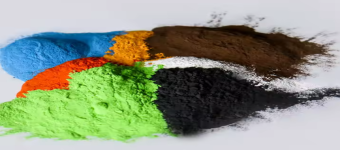
High-end color powder coating is a type of functional powder coating characterized by rich, fashionable, and sophisticated color effects. While providing excellent decorative properties, it also offers properties such as weather resistance, corrosion resistance, and wear resistance.
This article systematically introduces the concept, characteristics, functions, applications, selection considerations, and solutions to common problems of high-end color powder coating, with a particular focus on the specific applications of high-end color powder coating, to help everyone better understand what high-end color powder coating is, as well as its characteristics and functions.
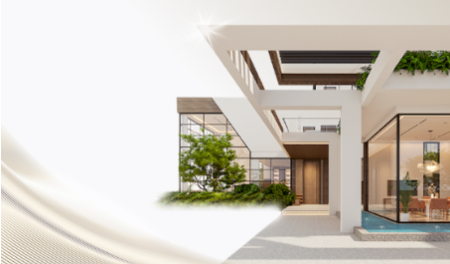
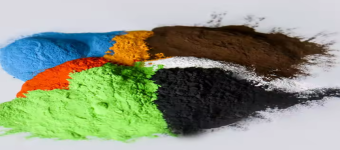
High-end color powder coating is a type of decorative powder coating made primarily from high-quality resins, pigments, and functional additives through scientific formulation and powder coating production processes. It places particular emphasis on color expression, surface appearance and texture, color stability, and the overall performance of the coating. It not only provides a wide range of color choices but can also achieve different visual effects such as high gloss, matte, metallic, pearlescent, and textured finishes, while also providing properties such as coating adhesion, wear resistance, corrosion resistance, and weather resistance.
The main characteristics of high-end color powder coating are as follows.
1. Rich and Themed Color System
It provides a much wider range of color choices than basic color charts and is often launched according to themes such as “Elegant and Serene” and “Bold Exploration,” precisely matching architectural design trends and meeting the personalized color-matching requirements of high-end projects.
2. Diverse Surface Textures
It can achieve various effects such as metallic gloss, simulated anodized finishes, snowflake patterns, hammer finishes, and ultra-matte metallic colors, combining visual layering with tactile expression.
3. Excellent Super Weather Resistance and Color/Gloss Retention
Top-level products provide warranties of 20 years or even 25–30 years and generally pass international certifications such as Qualicoat Class 2/3. GSB Master, and AAMA 2604/2605. In accelerated aging tests, they can achieve a gloss retention rate of >95% and a color difference of <0.8 after 2.000 hours of xenon-arc testing.
4. Technical Approach Combining Corrosion Protection and UV Resistance
Fluorocarbon resins, super-durable polyester, or self-layering technology (epoxy bottom layer + fluorocarbon top layer) are commonly used to provide excellent UV resistance while ensuring corrosion protection.
5. Low-Carbon and Environmentally Friendly
Low-temperature curing technology is typically used to reduce energy consumption. Some product series use bio-based raw materials to reduce their carbon footprint.
The main functions of high-end color powder coating are reflected in the following aspects:
1. Enhance Aesthetic Value and Design Expression
It provides themed color systems and diverse textures, such as metallic gloss, simulated anodized finishes, snowflake patterns, and ultra-matte finishes, allowing buildings, guardrails, curtain walls, and other products to combine visual layering with tactile expression and meet the personalized design requirements of high-end projects.
2. Provide Long-Term Protection
Through fluorocarbon resins, super-durable polyester, or self-layering technology, it can achieve 20–30-year warranties and resist outdoor exposure such as ultraviolet radiation, acid rain, and salt spray, significantly extending the service life of the substrate and reducing maintenance costs.
3. Combine Corrosion Protection and UV Resistance
Solutions such as dual-function self-layering technology (epoxy bottom layer + fluorocarbon top layer) provide excellent UV resistance while ensuring corrosion protection, resolving the contradiction of ordinary powder coatings that may have “good corrosion protection but poor weather resistance” or “good weather resistance but weak corrosion protection.”
4. Increase Product Added Value and Brand Premium
Through authoritative certifications such as Qualicoat Class 2/3 and AAMA 2605 and long-term warranties, high-end color powder coating helps finished products establish differentiated competitive advantages in the high-end market and supports higher pricing.
Where is high-end color powder coating used? Its specific application areas are as follows:
1. Building Curtain Walls and High-End Aluminum Profiles
This is the core application scenario for high-end color powder coating. High-rise building curtain walls, aluminum panels, louvers, and other applications need to withstand high levels of UV radiation, high humidity, and coastal corrosive environments while maintaining long-term color retention without fading or chalking.
2. Automotive Interior/Exterior Trim and Components
High-end color powder coating is used for automotive exterior components such as B-pillars, roof racks, bumpers, and exterior mirror housings, as well as interior components. These applications require Class A surface quality, scratch resistance, UV resistance, and chemical resistance.
3. High-End Industrial Applications and Infrastructure
Applications include bridge steel structures, transportation facilities, outdoor steel structures, and more. Fluorocarbon powder coatings have already been successfully used for corrosion protection of bridge steel structures, sports venues, art centers, and other projects. Emerging fields such as new energy vehicles, energy storage equipment, and 5G communication equipment also have dual requirements for super weather resistance and corrosion protection. For example, energy storage cabinets need to provide protection exceeding 2.000 hours of neutral salt spray testing.
4. High-End Furniture and Home Furnishings
Metal furniture, outdoor lighting fixtures, high-end home appliance housings, and other products require both decorative properties and durability. High-end powder coatings can provide textures such as metallic gloss, textured finishes, and matte finishes while meeting requirements for outdoor weather resistance or indoor wear and chemical resistance.
When selecting high-end color powder coating, we may face the problem of not knowing how to choose. Based on our industry experience, we recommend focusing on the following aspects when selecting high-end color powder coating.
1. Determine the Performance Level Based on the “Application Scenario”
The price differences among high-end color powder coatings essentially correspond to differences in weather-resistance service life and certification levels. You need to first determine which category the project belongs to:
(1) Top-level landmark projects/super-high-rise buildings/cross-sea projects (requiring more than 20 years): Products certified to AAMA 2605 or Qualicoat Class 3 must be selected. This category generally corresponds to fluorocarbon powder coatings (PVDF resin content ≥70%) or super-durable polyester.
(2) Mid-to-high-end commercial buildings/transportation hubs (requiring 10–15 years): Super-durable polyester powder coating certified to AAMA 2604 or Qualicoat Class 2 is sufficient. This category provides a good balance between performance and cost and can meet the requirements of most demanding outdoor applications.
(3) General outdoor/regional projects (requiring 5–10 years): Standard weather-resistant polyester powder coating certified to AAMA 2603 or Qualicoat Class 1 can be selected. This is the most cost-effective entry-level outdoor option and is suitable for ordinary urban environments.
2. Match the Durability Limit According to the “Resin System”
After determining the performance level, look at the specific resin. High-end color powder coatings mainly have two technical approaches:
(1) PVDF (Fluorocarbon) System
This represents the highest level of durability. Its C–F bonds are extremely stable and can resist UV-induced chalking and fading, providing an outdoor service life of 20–30 years. However, the trade-offs are that the gloss is usually relatively low, mostly matte, and the curing temperature is very high (230–260°C). If you are pursuing color stability that remains unchanged for decades and can accept a matte texture, choose this system.
(2) FEVE (Fluoroethylene-Vinyl Ether) System
Its durability is slightly lower than that of PVDF, but it provides better decorative performance, can achieve high-gloss effects, and offers greater application flexibility. It is suitable for high-end commercial projects that require both long-term weather resistance and a brighter appearance.
3. Verify Key Indicators According to the “Specific Environment”
Before finalizing the product, request the following data from the supplier to verify whether it is truly suitable for your project environment:
(1) For coastal or industrial areas: The key indicator is the duration of neutral salt spray testing (NSS). High-end fluorocarbon products generally require ≥2.000 hours without corrosion, with creepage at the scribe not exceeding 2 mm. If a product is only rated for 1.000 hours, it is not sufficient for these environments.
(2) For high-altitude or high-UV areas: Focus on QUV accelerated aging testing (340 nm) or Florida natural exposure data. The requirement is a gloss retention rate of ≥80% after 1.000 hours of QUV testing, or direct provision of actual Florida exposure data for 1–3 years.
(3) For high gloss or special textures: High-end color powder coatings can achieve effects such as metallic sparkle, simulated anodized finishes, and pearlescent effects. However, it should be noted that metallic and pearlescent pigments themselves may reduce weather resistance because metallic pigments are less stable under ultraviolet radiation than pure pigments. If a project is exposed to harsh outdoor conditions and metallic colors are desired, be sure to confirm that the supplier has weather-resistance certification data for the specific color.
The most common problems encountered during the use of high-end color powder coating are mainly reflected in the following aspects. Based on our industry experience, we propose corresponding solutions to help effectively solve the powder coating problems you encounter.
1. Orientation and Distribution Problems of Metallic/Pearlescent Pigments
Problem: Metallic sparkle or pearlescent effects are uneven, mottling occurs (cloud-like patterns), gloss and color vary unstably with viewing angle, or disordered arrangement of metallic pigments in the coating causes a “grayish” appearance.
Possible causes: The orientation of metallic pigment particles is inconsistent during spraying and curing. Fluctuations in spray voltage and air pressure result in uneven pigment distribution. Metallic pigments are not sufficiently dispersed in the powder.
Solutions:
(1) Select high-temperature-resistant metallic or pearlescent pigments that have undergone special encapsulation treatment to ensure their stability at curing temperatures.
(2) Stabilize spraying parameters: strictly control spray voltage and air pressure to reduce interference with pigment orientation caused by fluctuations.
(3) Optimize powder premixing and extrusion processes to ensure uniform pigment dispersion in the powder matrix.
(4) For high-end applications, the dry-blending method can be used to keep metallic pigment particles separate from the base powder to improve the flop effect.
2. Color Change and Loss of Gloss Caused by Sensitivity to the Curing Window
Problem: The color deviates from the standard, especially with yellow and red colors being prone to yellowing; the gloss does not meet requirements or cloud-like uneven brightness and darkness occurs, and super weather resistance decreases.
Possible causes: PVDF or high-weather-resistance polyester has a very narrow curing window and generally requires precise curing at 230–260°C. Overbaking can cause resin discoloration or pigment decomposition, while underbaking results in insufficient crosslinking and significantly reduced weather resistance. Combustion products generated by direct gas-fired curing ovens may also affect the coating appearance.
Solutions:
Strictly control the curing curve: use an oven temperature tracking instrument (T-Curve) to measure the actual workpiece temperature, ensuring that the actual temperature reaches 240–260°C and is maintained for a sufficient period. Do not rely solely on the oven temperature display.
Select high-temperature-resistant pigments: especially for dark and bright color systems, inorganic or high-performance organic pigments with sufficiently high temperature resistance should be used.
For direct gas-fired ovens, select powder coatings that are resistant to combustion gases, or switch to indirect heating.
3. Failure of PVDF Powder Adhesion and the Corrosion Protection Barrier
Problem: The coating has poor adhesion and is prone to peeling, or early corrosion and blistering occur in salt spray or humid-heat environments. This is a key risk point of PVDF powder coating.
Possible causes: PVDF itself is difficult to adhere directly to metal and must rely on a primer or chemical conversion coating. If pretreatment is incomplete, such as when aluminum does not form a qualified chromate or chrome-free passivation film, or if the primer is improperly applied, such as insufficient thickness or failure to pre-bake, the entire corrosion protection system may fail at its foundation. Actual cases have shown that when the conversion coating process was changed from a chromate-based system to a chrome-free system without verifying compatibility, serious discoloration and corrosion of PVDF powder coatings occurred on window frames, resulting in high rework costs.
Solutions:
(1) Strictly adhere to pretreatment standards: aluminum must undergo thorough degreasing and chemical conversion treatment, either chromate conversion or chrome-free passivation. The conversion coating weight must meet the specification, such as ≥40 mg/ft².
(2) Do not omit the primer: ensure that the primer thickness meets requirements, typically 5–10 μm, and complete pre-baking before applying the PVDF topcoat.
(3) For extremely demanding applications, use PVDF powder coating formulations containing specific additives, such as VDF/TFE/HFP, to improve direct adhesion, reduce orange peel, and potentially eliminate the need for a primer.
4. Amplified Effect of Orange Peel and Leveling Defects
Problem: The coating surface exhibits obvious orange peel, which is particularly noticeable on high-gloss or metallic-effect surfaces and damages the “high-end” appearance.
Possible causes: High-end color powder coatings often pursue specific gloss and texture effects. The selection of leveling agents and powder particle-size distribution in their formulations are more sensitive to process parameters such as spray distance, voltage, film thickness, and heating rate than conventional powder coatings.
Solutions:
(1) Optimize the powder formulation: select powder with a particle-size distribution concentrated at 25–40 μm and ensure that a sufficient amount of suitable leveling agent is included.
(2) Precisely control application: maintain the spray gun distance at 15–25 cm to avoid accumulation caused by spraying too close or uneven powder dispersion caused by spraying too far away. Use staged heating to provide sufficient melting and leveling time for the powder.
(3) Ensure uniform film thickness: uneven film thickness can amplify the visual appearance of orange peel. The powder output should be stabilized and the workpiece hanging method optimized.
If you encounter difficult-to-solve problems while using high-end color powder coating, please feel free to contact us at any time for professional technical support. We can discuss solutions together and work toward advancing the powder coating industry.
We hope this article can provide you with a professional and reliable reference regarding the powder coating industry. We sincerely welcome you to consult us regarding product performance, industry standards, application methods, precautions, or any other powder coating-related questions. We look forward to hearing from you at any time through a message or direct contact so that we can provide you with more detailed product information, demonstration videos, or customized solutions to help you fully understand the various functions and advantages of our products.


Company Phone
+86-21-6420 0566
Working hours
Monday to Friday
Mobile phone:
13816217984
Email:
info@qinsun-lab.com