Time: Popularity:0times
Powder coatings for automotihttps://duoppachem.com/powder_coating/5344.htmlve metal bumpers are coating systems specifically designed for metal bumper applications.
This article systematically introduces the definition, characteristics, functions, selection considerations, and common problem-solving measures for powder coatings used on automotive metal bumpers. It focuses particularly on the specific functions of metal bumper powder coatings to help readers better understand what these coatings are, as well as their characteristics and applications.
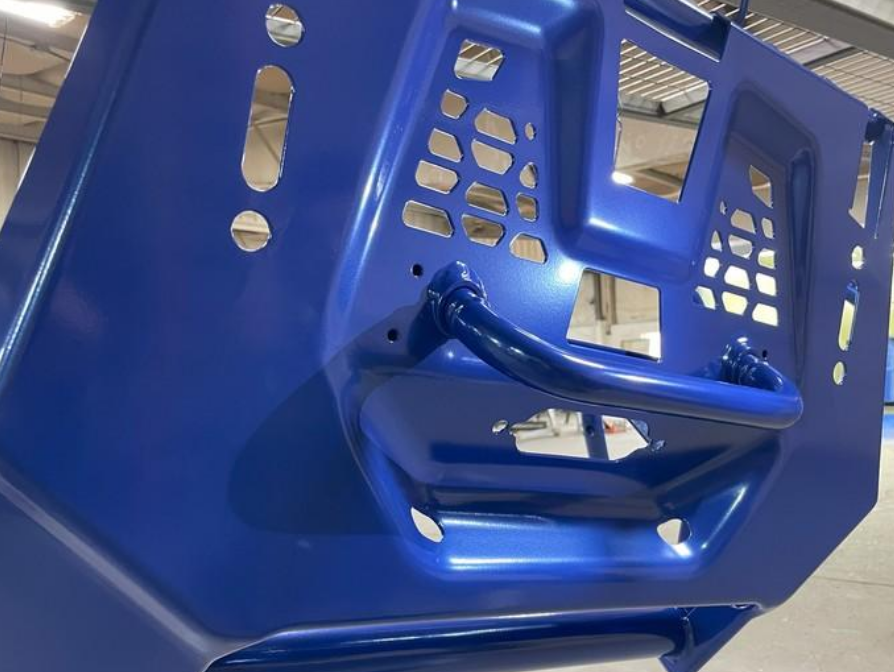
Powder coatings for metal bumpers are primarily polyester-based coating systems used for steel or aluminum automotive exterior bumper components that have passed OEM weather resistance certification. Their core value lies in meeting the highest weather resistance and corrosion protection requirements for automotive exterior components.
The main characteristics of powder coatings for metal bumpers are as follows:
1. Weather Resistance
OEM certification serves as an entry requirement, such as General Motors GMW 14664. Ford WSS-M70J5-C2. and Chrysler MS 90102.
Polyester systems are the mainstream choice. After 60 months of Florida outdoor exposure, gloss retention exceeds 85%. After xenon-arc aging at 2.000 kJ/m², gloss retention exceeds 75%.
2. Corrosion Resistance
Corrosion resistance is an independent performance requirement from weather resistance and must be evaluated in combination with the primer system and actual salt spray test data.
Some products pass 1.000-hour neutral salt spray testing in accordance with ASTM B-117. Actual performance depends on film thickness and pretreatment conditions.
3. Appearance and Functionality
Available finishes include smooth, sand-textured, and mesh-textured surfaces. Gloss levels range from ultra-low gloss to high gloss, with high-gloss products offering scratch resistance.
Stone-chip impact resistance achieves a rating of 3A according to SAE J400.
The main functions of powder coatings for metal bumpers are reflected in the following aspects:
1. Weather Protection: Resisting UV Aging
Automotive metal bumpers are exposed to outdoor environments for extended periods. Their powder coatings must resist gloss loss, chalking, and fading caused by ultraviolet radiation.
Polyester systems perform particularly well in this regard. Actual test results show that gloss retention can exceed 85% after 60 months of Florida outdoor exposure, meeting OEM requirements for the highest durability levels of exterior components.
Some products have also obtained OEM certifications from manufacturers such as General Motors, Ford, and Chrysler, helping ensure that the coating maintains its appearance quality under prolonged sunlight exposure.
2. Corrosion Protection: Isolating Corrosive Media
The coating forms a protective barrier between the metal substrate and the external environment, preventing moisture, salts, and chemicals from causing corrosion.
As exposed automotive components, bumpers frequently come into contact with rainwater, road de-icing salts, and road contaminants. Corrosion resistance directly affects their service life.
Some automotive powder coating products are certified through neutral salt spray testing, with corrosion creep from scribed areas controlled within relatively low limits.
When used together with an electrodeposition primer, the overall protective performance is more comprehensive.
3. Decorative Function: Providing Diverse Surface Finishes
Powder coatings provide metal bumpers with specific colors and surface textures.
Metal bumper powder coatings are generally available in low-gloss black or dark gray, with smooth, sand-textured, and even mesh-textured finishes. Gloss levels range from ultra-low gloss to high gloss, and high-gloss products can also offer scratch resistance.
Mesh-textured powder coating systems also provide a degree of breathability, helping reduce pinhole defects around bent areas of complex workpieces.
When selecting powder coatings for metal bumpers, buyers may face difficulties in determining which products are most suitable.
Based on our industry experience, we recommend focusing on the following factors:
1. Prioritize OEM Certifications as an Entry Requirement
Metal bumpers are exposed automotive safety-related components. Buyers should not rely solely on general claims of "weather resistance."
Suppliers should be required to provide certification evidence specifically applicable to metal bumper applications.
Products certified to OEM specifications such as General Motors GMW 14664. Ford WSS-M70J5-C2. and Chrysler MS 90102 are explicitly recognized as meeting the highest outdoor durability requirements for exterior components.
During procurement, verify whether the certification numbers cover your target vehicle models or the relevant OEM specifications.
2. Confirm the Resin System and Supporting Corrosion Protection
Resin system:
Polyester and acrylic systems are preferred choices for exterior metal components. These coatings are generally available in low-gloss black or dark gray.
New-generation polyester powder coatings can achieve gloss retention exceeding 80% after more than 60 months of Florida outdoor exposure. They also cost less than acrylic systems and have been adopted by several major automotive manufacturers.
Corrosion protection system:
Weather resistance and corrosion resistance are two independent performance indicators.
Complete protection for metal bumpers typically requires a powder coating topcoat used in combination with an electrodeposition primer.
Suitable products should clearly specify good compatibility with electrodeposition primers to provide full-life-cycle protection for both aluminum and steel substrates.
If a supplier provides only a topcoat without a supporting primer solution, further clarification is required regarding whether its actual salt spray test data are sufficient for your corrosion environment.
3. Select Specific Products According to Appearance Requirements
After confirming that the certification and coating system meet the requirements, select products according to the desired appearance.
Smooth / Sand-Textured Finishes, from Ultra-Low Gloss to High Gloss:
General-purpose automotive exterior powder coatings can cover these requirements. High-gloss products should also provide good scratch resistance.
Mesh-Textured Finishes:
Specialized mesh-textured powder coating solutions are available for SUV bumpers. Based on polyester systems, they combine textured appearance with solvent resistance and corrosion protection.
The most common problems encountered when using powder coatings for metal bumpers are mainly reflected in the following aspects.
Based on our industry experience, we have proposed corresponding solutions to help effectively resolve common powder coating problems.
1. Pinholes and Bubbles (Volcano-Like Craters)
Symptoms: Dense small holes or volcano-shaped depressions appear on the coating surface. These defects are particularly concentrated around weld seams, castings, or galvanized components.
Causes: Gas trapped inside or on the surface of the substrate, including air, moisture, and volatile substances from oil contamination, expands during heating and curing, breaking through the molten coating film as it escapes.
Weld seams and laser-cut edges on metal bumpers are particularly susceptible to these defects.
Attempting to cover the problem by increasing coating thickness may actually trap the gas and increase internal pressure, making the defects worse.
Solutions: Preheat the workpieces before spraying to remove trapped gases and volatile substances under conditions above the curing temperature.
Thoroughly clean weld seams and cut edges.
Appropriately reduce film thickness to allow gases to escape before the powder coating gels.
2. Uneven Metallic Appearance (Grayish Finish or Inconsistent Color)
Symptoms: Metallic effects are inconsistent, with different areas of the same workpiece or different workpieces appearing grayish or lacking the expected metallic appearance.
Causes: The orientation of metallic pigments, such as aluminum powder, is highly sensitive to spraying parameters and the recovered powder ratio.
An imbalance between metallic pigments and base powder in recovered powder can cause deviations in the final appearance.
In addition, poor grounding, improper spray distance, or unstable voltage can change the orientation of metallic flakes.
Solutions: Strictly control the recovered powder ratio. For critical color components, increase the proportion of new powder or avoid using recovered powder.
Ensure proper grounding of hanging fixtures and regularly clean hooks down to bare metal.
Maintain consistent spraying parameters, including voltage, spray distance, and powder output, and keep records. Use the same parameters for all workpieces within the same production batch.
3. Orange Peel (Uneven Surface Finish)
Symptoms: An orange-peel texture appears on the coating surface, particularly noticeable on high-gloss or smooth-finish bumpers.
Causes: The most common cause is excessive film thickness. The powder begins to gel before sufficient leveling occurs, locking the surface texture in place.
Excessively high electrostatic voltage can also cause uneven powder distribution, resulting in localized surface peaks and valleys.
Solutions: Reduce the total film thickness to within the recommended range.
Lower the spray gun voltage, reduce gun movement speed, and maintain consistent spray overlap.
Use an oven temperature profiler to verify the actual metal temperature profile of the workpiece, ensuring a stable heating rate and preventing the leveling window from closing prematurely.
4. Adhesion Failure and Brittle Cracking
Symptoms: The coating cracks or peels off during subsequent assembly or bending operations, or fails to meet cross-cut adhesion requirements.
Causes: Inadequate pretreatment, such as residual oil contamination or poor phosphating, is the primary cause of adhesion problems.
In addition, insufficient curing results in inadequate crosslinking density and poor adhesion, while overcuring makes the coating brittle and more susceptible to cracking under impact.
Excessive film thickness can also increase internal stress and reduce flexibility.
Solutions: Strictly implement the pretreatment process and regularly monitor the treatment bath conditions.
Use an oven temperature profiler to confirm that the workpieces reach the recommended curing temperature and holding time, avoiding both undercuring and overcuring.
Maintain film thickness within the supplier's recommended range.
Choose High-Quality Powder Coatings for Metal Bumpers to Improve Protection and Product Quality
Our company has more than 20 years of experience in powder coating research, development, and manufacturing.
Our powder coatings for metal bumpers offer good adhesion, corrosion resistance, abrasion resistance, and impact resistance. They can effectively improve the protective performance and appearance quality of bumper surfaces, helping prevent surface damage caused by everyday use and demanding environmental conditions.
According to the substrate type, operating environment, and coating requirements of your bumpers, we can provide customized powder coatings with different resin systems, colors, gloss levels, and surface finishes.
Contact us to obtain product information, technical support, and customized quotations for powder coatings for metal bumpers!


Company Phone
+86-21-6420 0566
Working hours
Monday to Friday
Mobile phone:
13816217984
Email:
info@qinsun-lab.com