Time: Popularity:0times
Automotive parts powder coating is an environmentally friendly industrial powder coating made with thermosetting resins as film-forming materials. It is specifically designed for surface protection and decoration of automotive metal parts and forms a film through electrostatic spraying and high-temperature curing.
This article systematically introduces the concept, characteristics, functions, applications, selection considerations, and solutions to common problems associated with automotive parts powder coating. It focuses particularly on the specific applications of automotive parts powder coating to help readers better understand what automotive parts powder coating is and what characteristics and functions it offers.
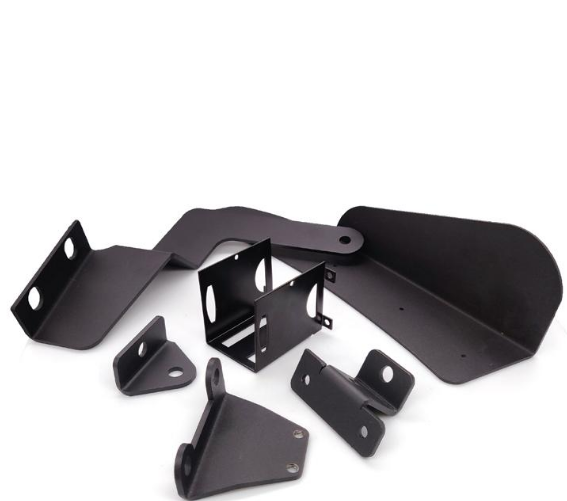
Automotive parts powder coating is a thermosetting powder coating that uses epoxy, polyester, or acrylic resins as film-forming materials. It is specifically designed for surface protection and decoration of automotive metal parts and forms a film through high-temperature curing after electrostatic spraying.
It consists of resins, such as unsaturated carboxyl-terminated polyester resin, phenolic-modified epoxy resin, or phenolic epoxy resin; curing agents, such as TGIC or HAA; pigments and fillers, such as aluminum tripolyphosphate and mica powder; and additives.
The main characteristics of automotive parts powder coating are as follows.
1. Environmental Friendliness and High Efficiency: Zero VOC emissions, no organic solvents, and no environmental pollution or health hazards. Oversprayed powder can be recovered, achieving a utilization rate of over 97%.
2. Highly Customizable Protective Performance: The coating system can be precisely selected according to the location of the component. Under-hood components, such as engine blocks and suspension springs, prioritize resistance to hot oil, stone-chip impact, and corrosion. Exterior decorative parts, such as wheels and roof racks, require a balance between weather resistance and appearance.
3. Thick Coating in a Single Application and Excellent Mechanical Properties: A relatively thick coating can be obtained with a single spray application. The coating film is dense and offers better stone-chip impact resistance, scratch resistance, and chemical resistance than traditional solvent-based coatings, effectively extending component service life.
The main functions of automotive parts powder coating are reflected in the following aspects.
1. Corrosion and Chemical Resistance Protection
The coating isolates the metal substrate from moisture, salts, engine oil, and acidic or alkaline media, preventing components such as suspension parts, brake lines, and fuel tanks from rusting under harsh operating conditions and extending their service life.
2. Weather Resistance and Decorative Appearance
For exterior decorative parts, such as wheels, roof racks, and bumpers, polyester or acrylic systems can resist UV aging and maintain color and gloss. They also offer a variety of appearance options, including high-gloss, matte, and metallic finishes.
3. Mechanical Protection
The coating film offers excellent stone-chip impact resistance, scratch resistance, and wear resistance, protecting underbody components, engine castings, and other parts from physical damage during vehicle operation.
4. Electrical Insulation
When used on electrified components, such as motor parts and battery pack housings, powder coatings provide reliable insulation protection, meeting the high-voltage safety requirements of new energy vehicles.
Where is automotive parts powder coating used? Its specific application areas are as follows.
1. Under-Hood and Chassis Components
This is a core application area for epoxy powder coatings, with a focus on corrosion resistance, engine oil resistance, and stone-chip impact resistance.
(1) Engine Systems: Engine blocks, valve covers, oil filters, and air cleaners.
(2) Suspension and Braking Systems: Suspension springs, coil springs, shock absorbers, torsion bars, brake pads, brake discs, and brake calipers.
(3) Transmission and Chassis Components: Splined shafts, steering shafts, and brake lines.
2. Exterior Decorative Parts
Polyester or acrylic systems are primarily used, balancing weather resistance and appearance.
(1) Exterior Body Components: Windshield wiper arms, roof racks, bumpers, door and window components, and roof trim strips.
(2) Wheels: Aluminum wheel powder coatings must provide excellent leveling, corrosion resistance, and adhesion for wheel balancing weights.
3. New Energy Vehicle Electrification Components
With the development of electric vehicles, the application of powder coatings in battery and motor insulation is growing rapidly.
(1) Battery Systems: Battery pack underbody protection plates, battery modules, cell housings, and battery cooling components.
(2) Motors and Electrical Components: Insulating coatings for motors, busbars, rotors, stators, and copper busbars.
4. Automotive Lighting and Optical Components
Headlight Reflectors: Specialized powder primers are required to achieve high reflectivity.
5. Interior and Small Metal Components
Sliding Door Tracks and Seat Rails: Nylon powder coatings provide self-lubrication, noise reduction, and wear resistance.
Fasteners: Small metal components such as screws, retaining clips, and seat belt components.
When selecting automotive parts powder coating, we may face uncertainty about how to make the right choice. Based on our industry experience, we recommend focusing on the following considerations when selecting automotive parts powder coating.
1. Determine the Resin System According to Component Location
This is a fundamental rule of coating selection. The choice of resin system for automotive parts powder coating depends entirely on whether the component is exposed to ultraviolet radiation.
(1) Under-Hood and Chassis Components (Not Exposed to Sunlight): Epoxy powder coatings are the preferred choice. They provide optimal corrosion resistance, engine oil resistance, and stone-chip impact resistance, along with excellent adhesion. Typical applications include suspension springs, brake lines, and engine blocks. Note that pure epoxy coatings must never be used outdoors, as ultraviolet radiation will cause rapid chalking and coating failure.
(2) Exterior Decorative Parts and Wheels (Long-Term Exposure to Sunlight): Pure polyester or acrylic systems must be selected. They offer excellent resistance to UV aging and maintain color and gloss. For example, windshield wiper arms can use standard polyester or superdurable polyester according to the required performance grade, while aluminum wheels require superdurable pure polyester clear powder or specialized primer powder.
(3) New Energy Vehicle Three-Electric Systems (Special Functions): Specialized insulating powder coatings are required. Components such as battery packs, motors, and busbars must meet high dielectric strength requirements, such as a breakdown voltage of at least 2.8 kV at a coating thickness of 100 μm, as well as UL 94 V-0 flame-retardancy certification, to ensure high-voltage safety.
2. Translate Performance Requirements into Verifiable Specifications
After selecting the coating system, confirm with the supplier whether the specific performance indicators meet your actual production conditions.
(1) Pretreatment Compatibility: Confirm whether the powder coating is suitable for your substrate and pretreatment process. Phosphating is generally recommended for steel components. Aluminum components may require chromating or a chromium-free conversion coating to ensure adhesion.
(2) Curing Window: Verify whether your oven temperature can meet the curing requirements. Under-hood epoxy powder coatings are available in low-temperature curing formulations at 130°C, suitable for heat-sensitive components. Conventional polyester powder coatings typically require 180–200°C.
(3) Minimum Key Performance Requirements: Adhesion must achieve Grade 0 in cross-cut testing. Chassis components generally require more than 500 hours of salt spray resistance, while under-hood components may require even higher performance.
3. Request Physical Samples for Final Verification
Do not rely solely on technical data sheets. Request test panels from the supplier that have been coated on the same substrate used in production and subjected to the same pretreatment process. Verify the color, gloss, adhesion, and the stone-chip impact resistance or insulation performance required for critical components before placing a bulk order.
The most common problems encountered when using automotive parts powder coating are mainly reflected in the following aspects. Based on our industry experience, we propose corresponding solutions to help effectively resolve the powder coating problems you encounter.
1. Faraday Cage Effect: Exposed Substrate in Deep Cavities and Weld Seams
Problem description: U-shaped channels, inner corners, welding gaps, and other deep cavity areas have exposed substrate or severely insufficient film thickness, while the outer edges have excessively thick coatings. When the groove depth exceeds 1.5 times its opening width, powder can hardly reach the bottom.
Possible causes: Electric field lines cannot penetrate deep cavity areas, leaving charged powder particles electrostatically shielded from the interior. The electric field concentrates at the edges, causing powder to accumulate preferentially at the openings and further obstructing powder entry into the interior.
Solutions: Reduce the voltage rather than increase it, as higher voltage can intensify powder accumulation at the openings. Increase the air pressure to mechanically drive powder into the cavities. Apply additional manual spraying to deep cavity areas, or consult the powder coating supplier about selecting a formulation that is less susceptible to the Faraday cage effect.
2. Color Differences and Grayish Appearance in Metallic Finishes
Problem description: Metallic coatings on wheels and decorative strips appear grayish or lack metallic brilliance, or there are noticeable color differences between automatic and manual spraying.
Possible causes: Metallic pigments have a flake-like structure, and their orientation within the coating determines the final color and appearance. Any fluctuations in spray voltage, spray distance, film thickness, or the proportion of recovered powder can change the orientation of the metallic flakes.
Solutions: Keep all equipment parameters fixed throughout the entire batch and do not change spray guns or adjust settings midway through production. Maintain a fixed proportion of recovered powder, with virgin powder accounting for at least 70%. Manual touch-up spraying should be performed before automatic spraying to avoid disrupting the established consistency of the metallic finish.
3. Poor Adhesion and Delayed Peeling on Galvanized and Aluminum Alloy Components
Problem description: Coatings exhibit poor adhesion on galvanized steel or aluminum components, and peeling may only become apparent after a period of storage or use following coating application.
Possible causes: The passivation layer on hot-dip galvanized components, such as chromate or trivalent chromium layers, can interfere with powder wetting. Trapped air or moisture in the galvanized layer may escape in the curing oven, forming bubbles or voids beneath the coating and compromising adhesion.
Solutions: Before spraying galvanized components, perform light sweep blasting to remove the oxide layer and open surface micropores. Alternatively, use pre-baking at a temperature approximately 30°C higher than the curing oven temperature to release trapped gases. Confirm the type of passivation layer and, if necessary, ask the supplier to adjust the passivation process.
4. Coating Failure in Welded Areas
Problem description: Coating failure consistently begins at weld seams, joints, or heat-affected zones, even when other areas of the workpiece perform well.
Possible causes: Welded areas combine surface contamination, such as residual welding flux and oil; complex geometries, such as gaps and spatter; and differences in thermal history, including oxide scale and microstructural changes. These three factors collectively weaken coating adhesion and integrity.
Solutions: Thoroughly clean welded areas after welding to remove residual welding flux and oxide scale. Grind or blast the weld seams to create an anchoring profile. If necessary, prioritize spraying the weld areas or increase the coating thickness in these regions.
Customized Solutions for Automotive Parts Powder Coating
Our automotive parts powder coatings are specifically designed to meet the surface protection and decorative requirements of various automotive metal components. They offer good adhesion, corrosion resistance, wear resistance, and surface stability, and can be widely applied to automotive chassis, brake calipers, metal brackets, suspension components, and various automotive metal accessories.
Based on the substrate characteristics, operating environment, coating performance requirements, and appearance requirements of different automotive parts, we can provide professional customized powder coating solutions to help improve component surface quality and long-term protective performance.
Contact us today to obtain a powder coating solution tailored to your automotive parts!


Company Phone
+86-21-6420 0566
Working hours
Monday to Friday
Mobile phone:
13816217984
Email:
info@qinsun-lab.com